Facial Sun Protection: How to Choose the Best SPF for Makeup and Everyday Use

Facial Sun Protection: How to Choose the Best SPF for Makeup and Everyday Use
Sun protection isn’t just for beach days or summer vacations. Every day, your skin is exposed to UV rays—even when it’s cloudy or you’re sitting by a window. That’s why daily facial sunscreen is essential, especially if you wear makeup. But how do you choose the right SPF that works for your skin type and layers well under foundation? Here’s a guide to finding the best sunscreen for everyday use.
Why Daily Sun Protection Matters
UV radiation is the leading cause of premature skin aging. It breaks down collagen, causes dark spots, and increases the risk of skin cancer. Even small amounts of sun exposure add up over time, so dermatologists recommend wearing sunscreen every single day, not just in summer.
UVB rays are responsible for sunburn, while UVA rays penetrate deeper into the skin and accelerate aging. A good facial sunscreen should protect against both—look for broad-spectrum protection on the label.
What SPF Should You Choose?
SPF stands for Sun Protection Factor and measures how well a product protects against UVB rays. For daily use, dermatologists in the U.S. generally recommend SPF 30 or higher. If you spend a lot of time outdoors, SPF 50 is a smart choice.
- SPF 15: Suitable for brief outdoor exposure, like walking to your car or running errands.
- SPF 30: A balanced option for everyday wear.
- SPF 50: Ideal for extended outdoor activities or fair, sensitive skin.
The difference between SPF 30 and SPF 50 is smaller than many think—SPF 30 blocks about 97% of UVB rays, while SPF 50 blocks around 98%. The key is applying enough and reapplying regularly.
Sunscreen and Makeup: How to Make It Work
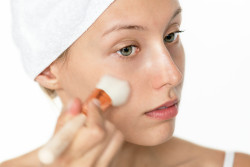
Many people skip sunscreen because they worry it will make their makeup slide or feel heavy. Fortunately, modern formulas are designed to work beautifully under makeup.
- Choose a lightweight formula—a gel, lotion, or fluid that absorbs quickly.
- Wait a few minutes before applying makeup so the sunscreen can set.
- Use a primer or setting spray with SPF for extra protection and a smooth finish.
- Reapply throughout the day with an SPF mist or powder to maintain coverage without disturbing your makeup.
If your foundation or tinted moisturizer includes SPF, remember that you’d need to apply a lot more than usual to get full protection. Always start with a dedicated sunscreen as your base layer.
Physical vs. Chemical Sunscreens
There are two main types of sunscreen filters:
- Physical (mineral) filters—contain zinc oxide or titanium dioxide, which sit on top of the skin and reflect UV rays. They’re great for sensitive skin but can sometimes leave a white cast.
- Chemical filters—absorb UV rays and convert them into heat. They tend to feel lighter and blend more easily under makeup.
Many modern sunscreens combine both types for optimal protection and texture.
How to Apply Correctly
To get the protection listed on the bottle, you need to use more than you might think. For your face and neck, apply about half a teaspoon of sunscreen. Don’t forget your ears, the back of your neck, and the tops of your hands—these areas often get overlooked.
Reapply every two to three hours if you’re outdoors, sweating, or wiping your face. For touch-ups during the day, use an SPF setting spray or powder to refresh protection without ruining your makeup.
Læs også:


Best Sunscreens for Different Skin Types
- Oily skin: Look for oil-free, mattifying formulas with a lightweight texture.
- Dry skin: Choose hydrating sunscreens with ingredients like hyaluronic acid or glycerin.
- Sensitive skin: Opt for fragrance-free products with mineral filters.
- Mature skin: Select sunscreens with antioxidants to fight free radicals and support elasticity.
A Habit That Pays Off
Wearing sunscreen daily is one of the simplest and most effective ways to maintain healthy, youthful skin. Once you find a formula that suits your skin and makeup routine, it quickly becomes second nature.
Sunscreen isn’t just a summer essential—it’s an investment in your skin’s long-term health and beauty.
Læs også: